Image


Updated: June 19, 2026
Extreme weather events are becoming the new normal. Droughts and heat waves parch soil, stress plants, and drain water supplies at a scorching pace. Harvests fail. Production drops. Costs rise.
For farmers, climate change impacts on crops, yields, and profits are an everyday reality. Meanwhile, the threat of hunger grows for those around the world who are living in “food deserts."
Here's some more food for thought:
Like never before, the pressure is on for today's agriculturalists—as all eyes, and mouths, look to them. The future may seem dark, but there is some light at the end of this agricultural tunnel:
Agrivoltaics
Universities and experimental stations around the world have been researching how this symbiotic, sustainable agriculture approach may be the answer farmers and communities need to solve the world’s food, water, and energy equation.
This is a situation where being shady is a good thing.
Agrivoltaics. Dual-Use Farming. AgriSolar. Co-Location. Agrophotovoltaics. Agri-PV. Known by many names, "agri" (field) "voltaic" (electricity) farming combines agriculture with solar energy production by the installation of solar panels over working agricultural lands or pollinator habitats. Typically, the panels are elevated so farmers can continue growing food or grazing livestock below them. The resulting symbiosis leads to a triple play of benefits.

Did you know that some crops/plants can get too much sunlight? This can ultimately cause some plants to actually…SWEAT! Often in croplands without shade, this means the plants lose water and demand even more irrigation to keep them hydrated and cool. Solar panels over crops provide shade and evaporation barriers, thereby retaining soil moisture and decreasing water needs by up to 90% compared to unshaded plants. This can help offset drought and extreme heat conditions, save water, and cut costs.
Agrivoltaics means farmers can earn income from both solar energy generation and crop production using the same land. You can offset your own energy use on your farm with the energy you generate, even storing it with batteries for later use. Plus, you can broker solar leases or power purchase agreements that sell your excess energy back to the grid.
Carefully designed agrivoltaic systems can optimize light for better plant growth. Crops like lettuce, tomatoes, cucumbers, and peppers benefit from partial shade, which usually leads to higher yields. And the microclimates created by solar panel systems not only extend growing seasons for cool weather crops like broccoli and kale, but also help address conditions that stress plants and make them more vulnerable to disease and pests.
Reduced water usage, energy savings, and increased crop production.
That's a WIN-WIN-WIN!
And…BONUS! Some plants provide a reciprocal cooling effect for the solar panels themselves, which improves the panels' energy production, efficiency, and operation.
As the promise of this double-duty farming practice grows, many agrivoltaic studies and initiatives have cropped up over the last few years.
So, you can imagine how thrilled we were when...
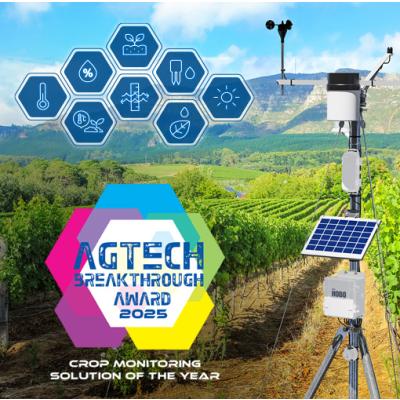
Right in our backyard, Dr. Sam Corcoran of the University of Massachusetts Amherst chose the HOBOnet Wireless Sensor Network to support her team's agrivoltaic research.
Corcoran is using HOBOnet to monitor microclimates at agrivoltaic research sites across the state. She says that wireless sensors have been a huge advantage because, with no wires to get in the way, data can be collected at any time without disturbing farming operations. Plus, the mounting stands that her team constructed can be removed temporarily, if needed.
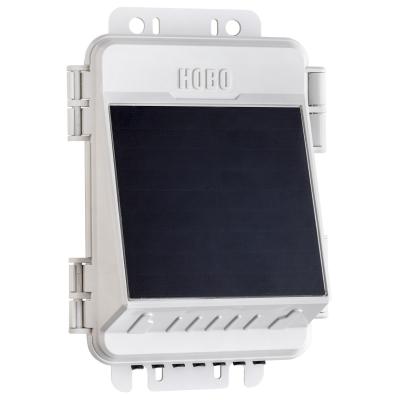
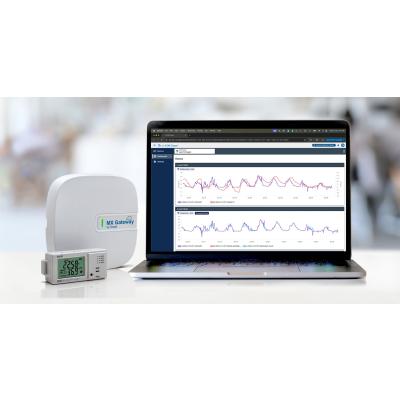
The core component of each system is a HOBO MicroRX monitoring station. Corcoran says the appeal of the system is being able to connect as many as 50 sensors scattered throughout each agrivoltaics site to a powerful sub-GHz mesh network that wirelessly transmits data (up to 2,000 feet) back to the central station. The station then pushes that data to the cloud, providing access to all sensor data at once, which simplifies viewing and analyzing data for multiple locations under different solar panels.

The UMass team is using HOBOnet systems to track growing conditions for cranberries, hay, and vegetables under articulating, mobile solar arrays. They’re seeing how variables like temperature, soil moisture, relative humidity, evapotranspiration, and light differ, and observing how those conditions influence crop yields and performance over time.
Corcoran's team uses LI-COR Cloud software to access data 24/7, and even receive text/email alerts that can be configured to signal when specific conditions exist.
We'll let you know about Dr. Corcoran's research findings in a future blog.
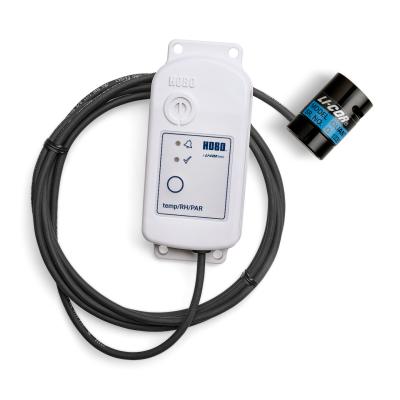
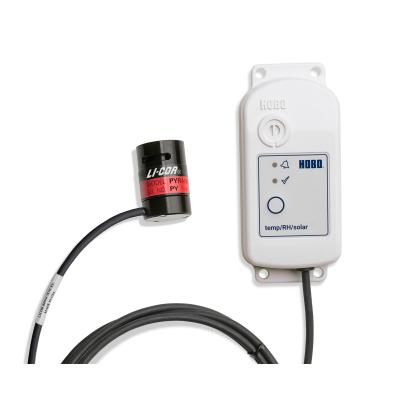
HOBO now offers additional tools that assess solar radiation and photosynthetically active radiation (PAR) for agrovoltaics sites as a complement to what's happening with the soil and air:
Learn more from Dr. Corcoran herself!
View her HOBO Thought Leader webinar: Microclimate Monitoring in Agrivoltaics