Image

Studies around the world continue to investigate climate change-related impacts, seeking innovative solutions to mediate them. The effects of extreme heat due to global warming top that list. And from Chicago officials monitoring how underground heat threatens architecture and infrastructure to Canadian journalists using temperature data loggers in un-air-conditioned homes to investigate the dangers of urban heat on occupants…HOBO data loggers have been on the research front lines.
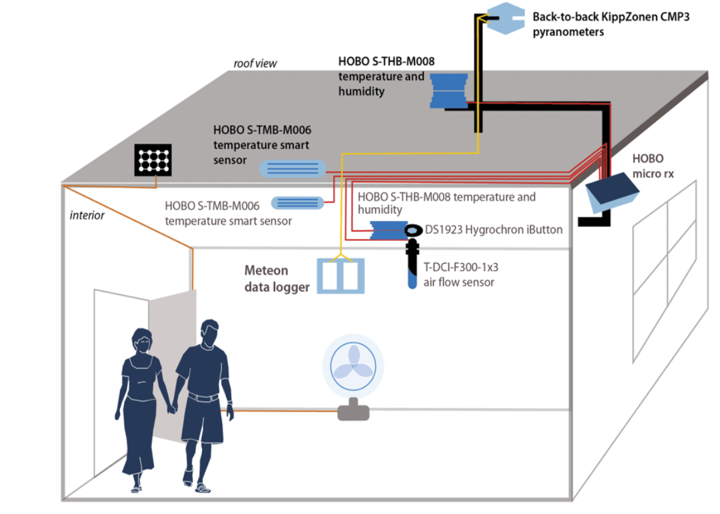
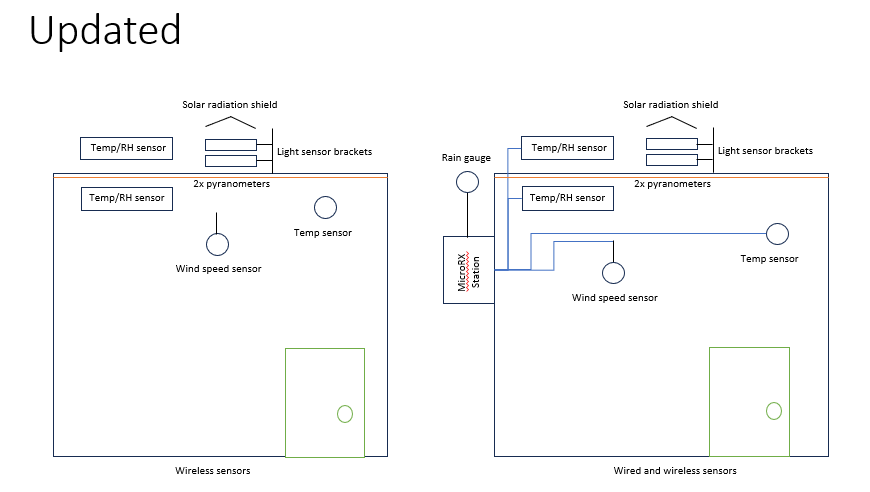
HOBO monitoring products are part of a cool study, literally, led by The University of Auckland. The university's team of scientists is using an indoor and outdoor monitoring system of HOBO sensors and data loggers to study how effective white-painted cool roofs can be to mediate extreme temperatures that are impacting vulnerable populations living in some of the hottest places on the planet—sub-Saharan Africa, Mexico, India, and Niue, a small island in the South Pacific.
According to the University’s P5 study, rising mean global temperatures and extreme heat are having adverse effects on the health of millions of people living in poor housing conditions that expose them to dangerously high indoor temperatures; There’s been a higher prevalence of cardiovascular disease, hypertension, and diabetes that’s leading to premature mortality. In Nouna, Burkina, one of the locations for the study, summer maximum temperatures regularly exceed 40°C…104°F. Not only are these populations experiencing some of the worst impacts from extreme temps due to climate change, they also are least able to access…or afford…modern solutions to mediate the heat, like air-conditioning or more advanced building materials and insulation. Before the University of Auckland, not a single study had been conducted in these “hot spots” where vulnerable populations are most severely impacted by man-made climate change to determine viable affordable heat management solutions.
Not cool.
Scientists from Heidelberg Institute of Global Health launched a multiphase study that is testing and evaluating how cool roofs, a fairly simple heat management solution, could bring the heat wave of change that communities in hot spots need.
“Our long-term research goal is to identify viable passive housing technologies with proven health and environmental benefits to reduce the burden of heat stress in communities affected by heat.” - P5 Project, Climate Change and Health in Sub-Saharan Africa."
So what are cool roofs anyway? Traditionally, roofs in the world are/have been dark colored. In the intense heat of full sun, dark roofs’ surface temp can increase up to 100°F MORE than the actual, ambient temperature. The fallout from that heat amplification? The health risks outlined above, more energy use due to a demand for cooling systems/AC…which contribute even further to “urban heat island effect” in cities and more populated areas. Talk about a trickle down effect!
Enter cool roofs. One of several different passive and active thermal management systems, cool roofs are being used in both
urban and rural environments to buffer the intensity of heat due to sustained high temperatures and direct sunlight by absorbing or reflecting it:
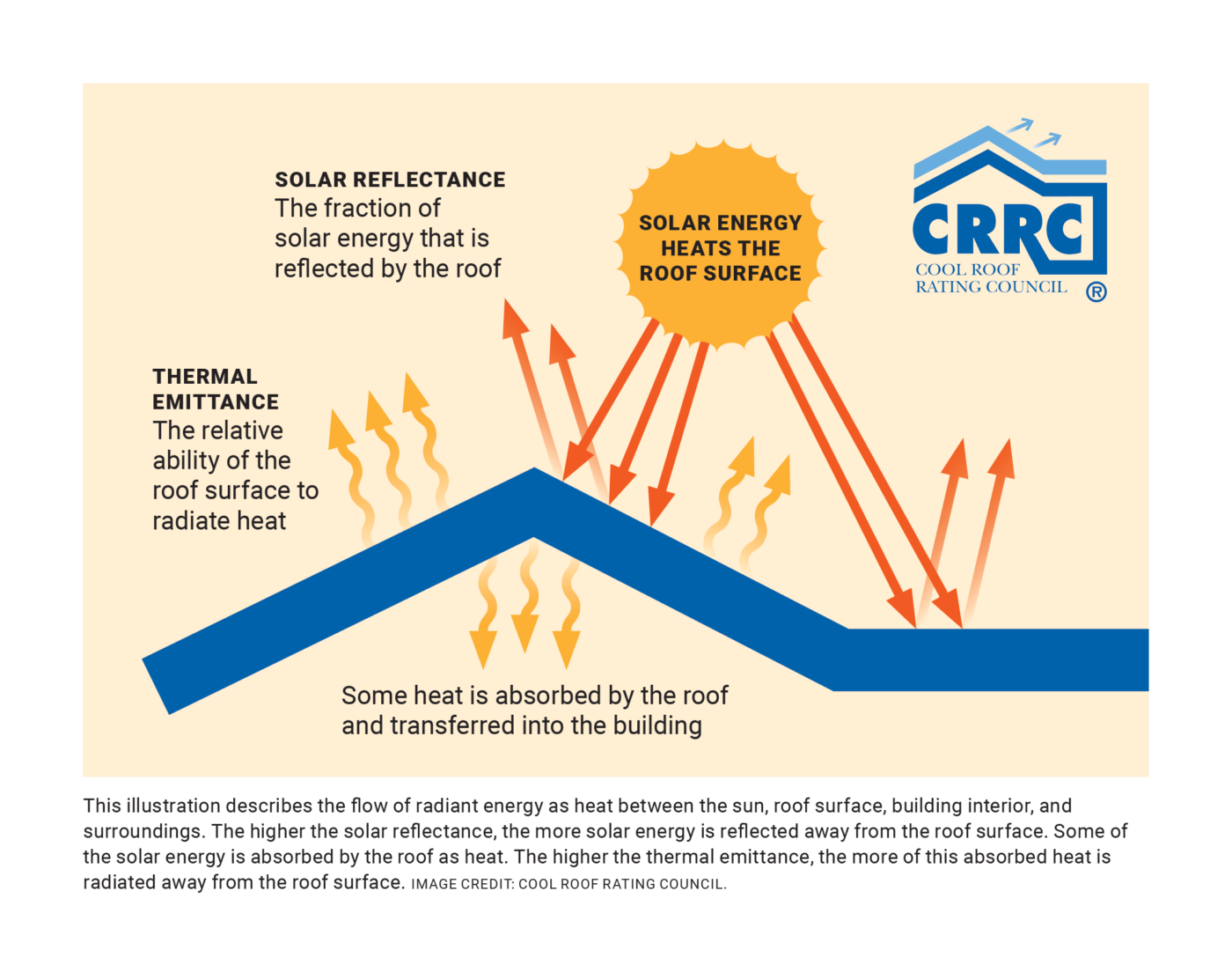
Solar panels have been a great sustainable energy solution for absorbing sunlight and generating electricity, and they are also great for solar reflectance on roofs, one of two factors importance for roof cooling. Installing solar panels can also offset the energy required for air conditioning and HVAC systems.
Dating back to Neolithic cave roofs and pyramid terraces in Mesopotamia, green roofs—or “vegetative”, “living” roofs—grow plants over traditional roofs using a waterproof membrane and soil to produce multiple benefits. Not only do these roofs enhance aesthetics, they also; provide cooling performance and energy efficiency (by both insulating and absorbing solar radiation), mitigate stormwater runoff, as well as increase habitats and reduce the heat island effect in urban environments. Learn more about the history of cool roofs HERE.
Planting trees, shrubs, and other vegetation near structures can create shade and offset excess heat generated by buildings and dark surfaces like roads and sidewalks. This is especially beneficial in cities to absorb solar radiation. See how a New York City non-profit studied the cooling benefits of urban green spaces in 12 cities to mitigate heat impacts from climate change.
Many homes and buildings rely on HVAC systems or retail AC products units for air conditioning, which, although their energy-efficiency has improved, still require high amounts of electricity to run, and can be cost-prohibitive or unavailable for many around the world. Air conditioning systems also produce heat exhaust, which has been tied to increasing the heat island effect.
An affordable alternative to darker roof materials or green roofs is imply using light colored paint that can help reflect solar radiation. There are also many specialized white roof coating materials with further heat-reflective benefits.
The Auckland team is studying how roofs painted with white paint could mediate the extreme indoor heat and its negative impacts. Cool roofs are likely the most affordable, simplest of heat management system solutions for these vulnerable populations.
The cool roof study begun last summer will deploy approximately 1700 MX1100 data loggers that measure temperature and humidity along with remote monitoring stations.
The project’s research that started in sub-Saharan Africa has now expanded to four different locations. The team is conducting a household-cluster randomized controlled trial (cRCT) to establish the effect a cool roof has on heart rate (as an indicator of physiological stress) as well as indoor temperature, humidity, morbidity and mortality from cardiovascular issues, household energy consumption, and even socioeconomic benefits.

Written by Chris Walker, Owner, RoofPal Services LLC, [email protected]
After 18 years of extreme desert heat, the roof of the Nationwide® Scottsdale Insurance Company headquarters building in Scottsdale, Arizona began the natural deterioration process. The maintenance staff had been chasing leaks for nearly five years when they hired Alan Stevens Associates, Inc. to solve the problem and bring their roof system into the 21st century.
The original roof system was a ballasted EPDM over 4" of R-20 roof insulation on a concrete roof deck, and blanketed by 2" of river rock. Compared to the modern heat resistant roofing systems used in Arizona today, this was fast becoming a major liability in regards to structural integrity, maintenance costs and energy consumption.
The new cool roof system installed by Starkweather Roofing in December 2008 consisted of 3" of R-19 ISO board insulation with a tight-set roofing adhesive glued to the concrete roof deck, and a self-adhesive Polyglass Eastoflex SAV base sheet and PolyKool cap sheet over the top. This roof system is capable of withstanding Arizona's infamous extreme temperatures and rapid temperature changes of the summer monsoon season.
The PolyKool sheet is white with a reflective surface (solar reflectance index value of 84) that not only meets all current and proposed energy performance standards, but also withstands constant foot traffic, ponding water and residual chemicals from the building's cooling towers.
For more information on this massive project, please read the article written about it in the July/August 2009 edition of Western Roofing Magazine.
At the request of the Arizona Cool Roof Council in July 2009, Starkweather Roofing set out to determine if white roofs are indeed cooler and more energy efficient than non-white roofs. The Nationwide® Scottsdale Insurance Company roof was a perfect choice for this in-depth cool roof study.
On the morning of August 6th 2009, Chris Walker and Sherm Robison of Starkweather Roofing installed HOBO data loggers from Massachusetts-based Onset Computer Corporation directly on the roof surfaces and in the low-traffic, non-air conditioned stairwells of both the Nationwide® Scottsdale Insurance Company building and a building next door in the same corporate plaza (which still has the original ballasted EPDM roof system in place): It was a perfect "before and after" condition, being that the results would be based on identical weather conditions as opposed to data from one year to the next on the same building, where many different variables could negatively affect the results.
The temperature sensors on the roof surfaces were secured under the exact materials used in each of the current roof systems, as to not allow for the direct sunlight to impact the readings and to give an accurate surface temperature on each building. The temperature sensors placed in the non-air conditioned stairwells were secured three feet from the roof hatch and directly to the concrete roof deck to measure the energy efficiency of the roof systems (in other words, they measured how much heat was being transferred through the concrete deck into the inside of the building).
The sensors measured both the roof surface and stairwell temperatures on both buildings every hour, 24 hours per day from August 6th to September 4th. Official temperature data for Scottsdale over the same time period and at the same time intervals was obtained as well. During the data collection period Scottsdale had primarily hot sunny days, with a few monsoon storms sprinkled in, which allowed for near perfect test conditions.
The conditions of this study were considered near perfect for multiple reasons. First, it involved virtually identical buildings that were side-by-side. Second, one building had the old roof system and the other had the new cool roof system – so a before-and-after analysis could be conducted at the same time and under the same conditions. Finally, a concrete deck is not typical in Arizona (plywood decks are much more common). If the data proved any significant increase in energy efficiency in a building of this construction, it would be known with certainty that even greater results would be gained in a building of typical Arizona roof construction.
Image

|
| Figure 1.1 – Average Rates of Change of Internal Stairwell (SW) Temperature |
The first thing that caught our attention was the significant reduction of thermal shock, which is a direct result of the more consistent cool roof surface and internal building temperatures of the PolyKool roof.
Thermal shock was minimized by slowing down the rate of temperature change (both up and down) on the roof surface, which in turn nearly eliminated the rate of temperature change inside the building. The only other way to minimize thermal shock is to use materials with much greater strength, increased thermal conductivity and reduced coefficient of thermal expansion – but that approach is more expensive and doesn't guarantee as favorable of results.
The rate of change in temperature inside the EPDM building was expected – it heats up fast, and cools down even faster. But even more surprising was just how regulated the temperature inside the PolyKool building is. The variation in temperature in the EPDM stairwell is 3.75 times that of the PolyKool stairwell. In fact, there is so little temperature variation in the PolyKool stairwell now that we are led to assume that internal thermal shock may be eliminated completely, and that maintaining a constant internal temperature is much easier as well:
Notice that between 10:00pm and 6:00am the buildings are very similar in temperature internally, but the EPDM building is always hotter than the PolyKool building. At 8:00am the EPDM building begins to heat up dramatically while the PolyKool building remains virtually unchanged. Later, between 5:00pm and 8:00pm, the EPDM building cools down even faster than it heats up – and again the PolyKool building keeps a constant internal temperature.
Image

|
| Figure 1.2 – Average Internal vs. Average Outside Temperatures |
Figure 1.2 demonstrates how the internal temperatures change as a result of the temperature outside. Notice how the PolyKool building stays virtually the same all day while the EPDM building fluctuates rapidly. There is only an average range of 1.94 degrees in internal temperature from the hottest to the coolest part of the day inside the PolyKool building. Conversely, the EPDM building typically has a 7.67 degree range of internal temperature in a 24 hour period. On a building as large as these two, nearly 8 degrees means a lot in terms of the additional energy required to maintain a consistent temperature for the building's tenants.
Over the course of a typical hot August day in Scottsdale Arizona, a white roof is 4.62% cooler (more energy efficient) than a non-white roof. During the hottest point in the day inside the building (5:00pm), a white roof is 8.49% cooler (more energy efficient) than a non-white roof. During the maximum internal temperature increase hours of 7:00am – 5:00pm, a white roof is 6.97% cooler (more energy efficient) than a non-white roof.
Based on this data, we would suspect that the August kilowatt consumption of the building with the PolyKool roof should have reduced by approximately 7.00% or more from the previous year (when it had a ballasted EPDM roof), assuming all other items remaining equal.
In August 2008, Nationwide® Scottsdale Insurance Company headquarters building in Scottsdale, Arizona consumed 719,000 kilowatts of electricity. According to maintenance supervisor Chris Peterson, all other items remained virtually unchanged from 2008, and that the installation of the PolyKool roof system was the only substantial difference in 2009. In August 2009, the kilowatt consumption was 663,000 – a 7.79% decrease (or $5,450) in electricity required to cool the building (much more energy efficient).
Again, this is on a building with a concrete roof deck. Also note that the PolyKool cap sheet only has a solar reflective index (SRI) value of 84. If the building had a plywood roof deck (which is much more typical in Arizona) and if the SRI value of the materials used were higher (100 is typical of most high-quality roof coatings), the energy savings would be even greater. Starkweather Roofing has begun performing similar analysis using buildings with plywood roof decks as well as higher SRI value roof coatings to compare the results.
Image

|
| Figure 2.1 – Average Roof Surface vs. Average Outside Temperatures |
Image

|
| Figure 2.2 – Average Rate of Change of Roof Surface Temperatures |
The PolyKool cool roof is on average 12 degrees (13.57%) cooler than the EPDM roof. But that includes overnight when there is no direct sunlight.
Figure 2.1 shows that 12:00pm is the largest difference in roof surface temperature over the course of our study, when the average outside temperature was 96.66°F. The EPDM roof was on average 156.28°F at that time, but the PolyKool roof was only 128.59°F. That's a difference of 27.69 degrees (the EPDM roof is 26.69% hotter). Between 9:00am and 5:00pm (the maximum sunlight hours), there is an average 22.40 degree (18.55%) difference in roof surface temperature - quite significant to the long-term survival of rooftop equipment (as well as the building's facilities workers).
As demonstrated in Figure 2.2, the rate of roof surface temperature increase between 6:00am and 8:00am were similar on both buildings, but the EPDM roof kept getting hotter while the PolyKool building started to level off. Also, the PolyKool building cooled off more gradually than the EPDM building, which heats up really fast and becomes extremely hot, and then cools down at a faster rate (although it never gets cooler than the PolyKool roof). It isn't until 7:00pm when they come back to the same rate of temperature change. This is another indication of reduction in thermal shock with the PolyKool cool roof.
Learn more about cool roof performance in this webinar on Monitoring Cool Roof Thermal Performance