Image

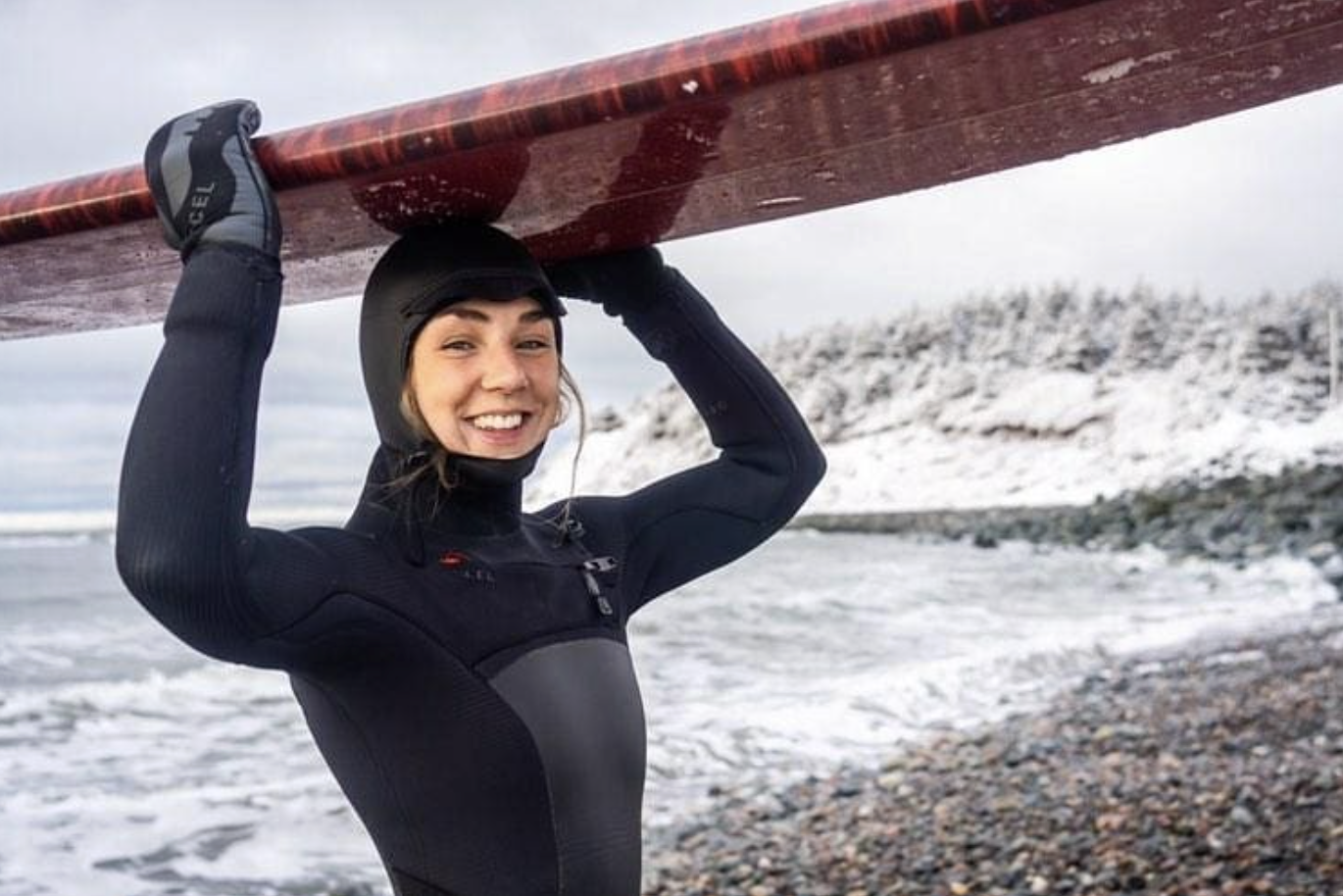
I currently work as a project manager for an ocean research organization based at a Canadian university. However, it was a personal hobby project, collecting sea surface temperature data during my surf sessions, as a way to explore surfer participation in citizen science and help fill coastal data gaps, that led me to become a HOBO Ambassador.
I was born and raised in Nova Scotia, Canada, and I now live in a small, rural coastal community not far from where I grew up. All of my post-secondary education took place here as well, including completing my Master of Marine Management at Dalhousie University in 2018. When I’m not working, or chasing after my spirited two-and-a-half-year-old, you can usually find me surfing or freediving along our beautiful North Atlantic coast.
I have an interdisciplinary background that bridges natural and social sciences. My Master of Marine Management program centered on approaching coastal and ocean issues from integrated socio-environmental perspectives, with coursework ranging from oceanography to marine policy. Over the past decade, I’ve worked at the intersection of ocean research, environmental conservation, and community collaboration across the NGO, charitable, and research sectors. My experience spans project and program management, fund development, and strategic communications, all tied together by a commitment to connecting people with the marine environment and advancing sustainable solutions.
A genuine love for the ocean, it’s incredible creatures, and a constant desire to keep learning and contributing drive me every day.
Personally: Raising a curious, energetic child while staying deeply connected to the ocean in ways that bring me joy, balance, and perspective. I’m also incredibly proud of playing a key role in engaging community members and a conservation organization in helping to protect over 150 acres of critical coastal habitat in my local area, creating space for biodiversity to thrive while maintaining meaningful coastal access for people.
Workwise: I’ve had the opportunity to contribute to award-winning initiatives, help secure major grant funding, protect numerous natural spaces for future generations, co-author collaborative research papers, support research that generates insights into the movement of aquatic animals, and organize events that bring diverse groups together. I’m grateful and inspired to work alongside incredible colleagues, including Indigenous knowledge holders, data experts, ocean tech specialists, student researchers and professors, government partners, and more.
I strive to continue deepening my relationship with the ocean through surfing, freediving, and community connection, while raising my child with a strong sense of stewardship for the natural world. I also hope to see my personal surf data collection project grow and be adopted by other engaged surfers around the world. I want to apply my project management expertise to support greater understanding of the marine environment and build inclusive bridges between western science, Indigenous knowledge, and community priorities for sustainable ocean management.
I had to think about this one for a bit, but what stood out to me was the idea of something that’s tough, rugged, durable, and able to go anywhere, which feels especially fitting for a tool that can operate across the wide range of conditions encountered in marine environments. I’ve repeatedly exposed my HOBO temperature logger to extreme winter surfing conditions in the Northwest Atlantic, including well below zero air temperatures and ~1 °C sea surface temperatures—with no issues at all.
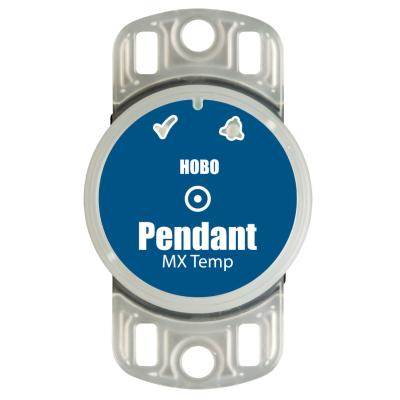
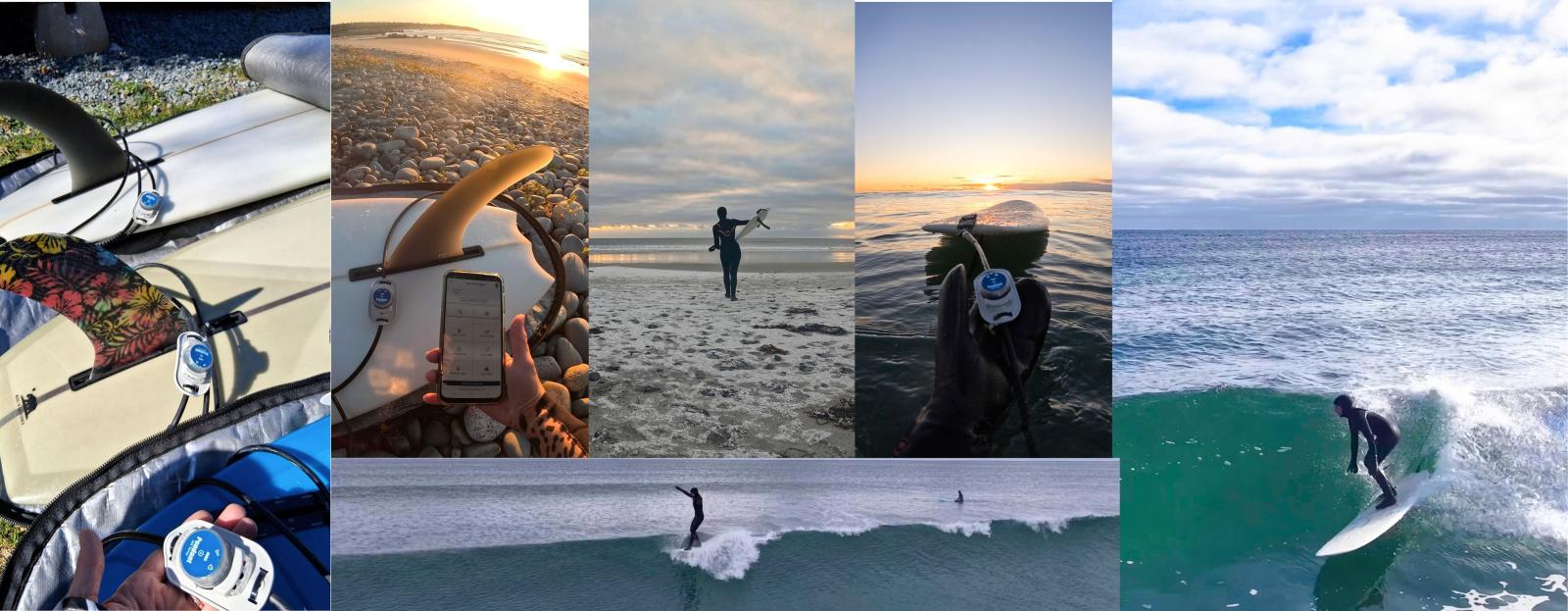
I regularly use the HOBO Pendant MX Temperature Logger, which I’ve attached to all of my surfboards to collect sea surface temperature during every surf session.
With my passion for surfing with ocean science background, I was inspired by initiatives like Smartfin, engineers at University of California, San Diego (UCSD) who are developing a surfboard fin that can passively collect water quality data and upload it seamlessly to a cloud platform for scientists. I wanted to explore that concept of how recreational time in the water could contribute to a better understanding of our coastal environment.
Since sensor-integrated fin technology isn’t yet widely available, I developed a DIY approach—by attaching a HOBO Pendant MX Water Temperature Logger to my surfboard leash. This allows me to record consistent, in-water sea surface temperature measurements throughout each surf session to build a robust data set of observations. To date, I’ve logged over 80 surf sessions across four seasons. I’ve even begun visualizing and analyzing the data, including comparisons with nearby nearshore buoy sea surface temperature records. (MX logger data can also be uploaded to the LI-COR Cloud platform via a data plan and the HOBOconnect app)
These grassroots-level observations led to a connection with Natalie Fox, founder of Citizens of Surf (a UN Ocean Decade initiative). She and Citizens of Surf are now also using my data collection method all the way across the Atlantic in Portugal! I’m constantly connecting with other surfers interested in joining the data collection effort and inspiring new citizen scientists to launch their own projects—one person doing summer shark surveys has deployed these same HOBO Pendant loggers on moorings in a local bay to explore potential relationships between sea surface temperatures and shark behavior.
I’m not sure where this project will ultimately lead, but it’s clear that the power of accessible tools like HOBO data loggers spark collaboration, and make data collection more accessible and genuinely fun for community members to participate in supporting ocean science.
The small size, affordability, and ease of use of HOBO loggers make environmental monitoring approachable and accessible, not just for researchers...but anyone.
Accurate data empowers informed decision-making, supports stronger science, and helps us understand the changes unfolding in our ocean and coastal ecosystems. When citizens AND scientists can be directly involved, it fosters deeper understanding, shared ownership, and trust in the science that ultimately leads to stronger stewardship and more effective actions to care for our environment.