Image

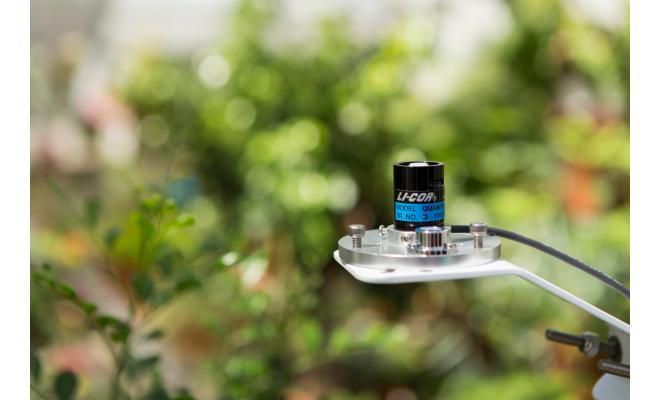
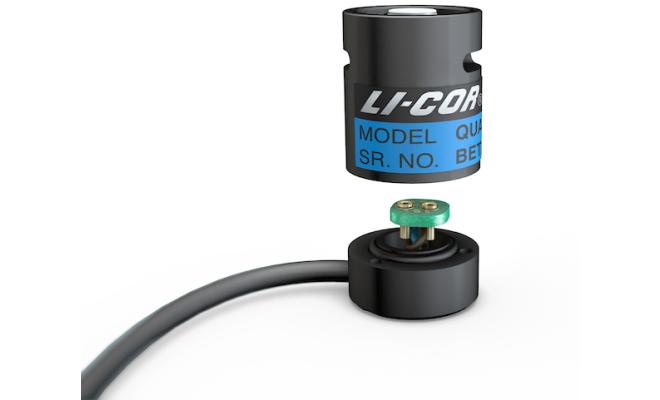
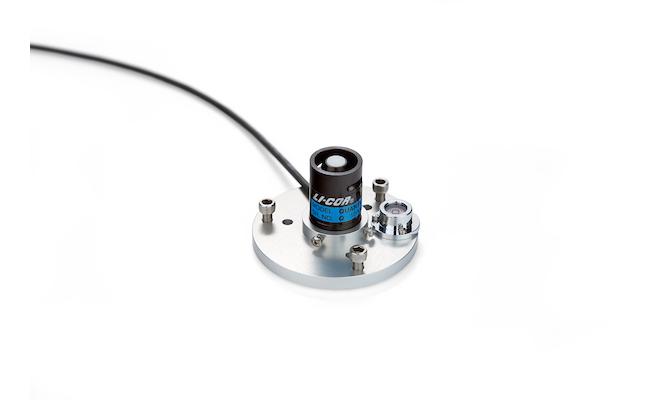

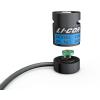
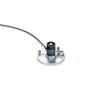
The LI-190R-SMV measures Photosynthetically Active Radiation (PAR), in µmol of photons m-2 s-1. It provides accurate measurements—in the open, in greenhouses, under plant canopies, or in growth chambers—for most broad-spectrum light sources, including natural sunlight, artificial, or mixed sources.
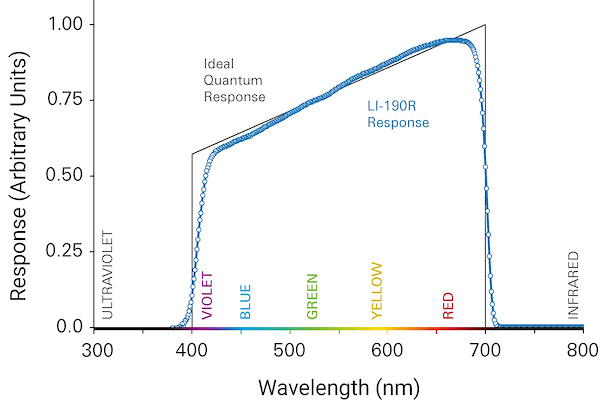
Plants use light in the wavelength range from about 400 to 700 nm to drive photosynthesis. The efficiency with which plants use light varies somewhat across this range, but McCree1 showed that measuring PAR provided a consistent way to predict plant photosynthetic response regardless of the spectrum of the light source.2
1McCree, K.J., 1972. The action spectrum, absorptance and quantum yield of photosynthesis in crop plants. Agric. Meteorol. 9: 191-216.
2McCree, K.J., 1972. Test of current definitions of photosynthetically active radiation against leaf photosynthesis data. Agric. Meteorol. 10: 443-45
The LI‑190R uses a high-quality silicon photodiode and glass optical filter to create uniform sensitivity to light between 400 nm to 700 nm, which closely corresponds to light used by most plants. A newly designed optical filter tailors the spectral response to an unprecedented performance standard. Furthermore, the new filter is unaffected by environmental factors such as heat or humidity. The filter blocks light with wavelengths beyond 700 nm, which is critical for measurements under vegetation where the ratio of infrared to visible light may be high.
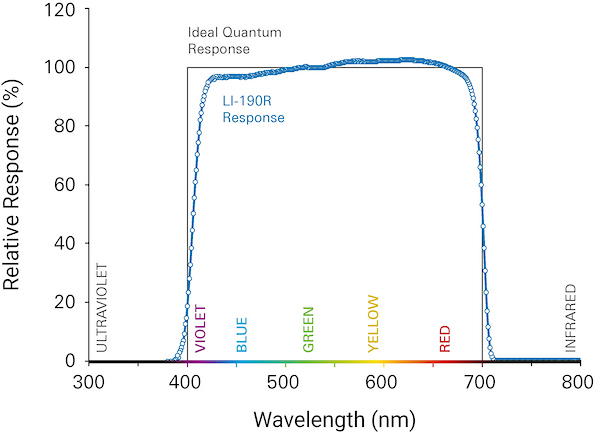
The LI-190R sensor features excellent cosine response, which ensures accurate measurements under diffuse light and when sunlight originates from a low solar angle. This, in combination with high resolution at low light levels, makes the LI-190R useful for determining the light compensation point in plants.
± 5% traceable to the U.S. National Institute of Standards and Technology (NIST)
Typically 5 μA to 10 μA per 1,000 μmol s-1 m-2
Maximum deviation of 1% up to 10,000 μmol s-1 m-2
Less than 1μs (2 m cable terminated into a 604 Ohm load)
± 0.15% per °C maximum
Cosine corrected up to 82° angle of incidence
< ± 1% error over 360° at a 45° elevation
No error induced from orientation
−40 °C to 65 °C
0% to 100% RH, Non-Condensing
High stability silicon photovoltaic detector (blue enhanced)
Weatherproof anodized aluminum body with acrylic diffuser and stainless steel hardware; O-ring seal on the sensor base
24 g head; 60 g base/cable (2 m) with screws