Image


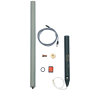

Requires Domino for Windows® Software (Free Download) and compatible computer.
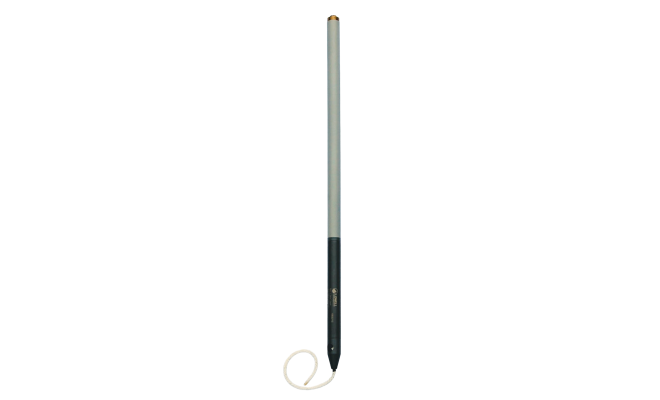
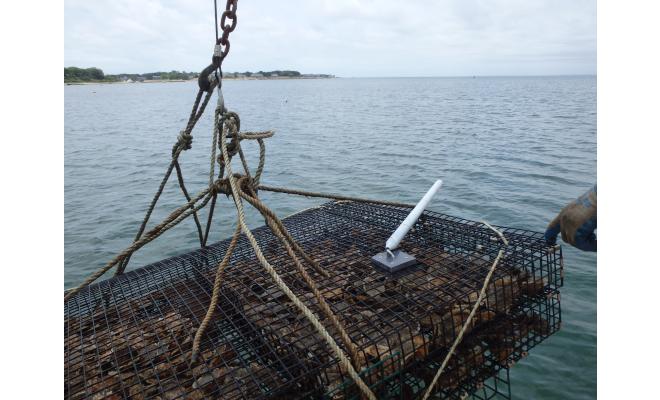
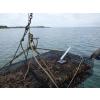
The TCM-1 is ideal for measuring water velocity from inland to the edge of the continental shelf, its simple design and lower cost making it feasible to measure current in many locations simultaneously.
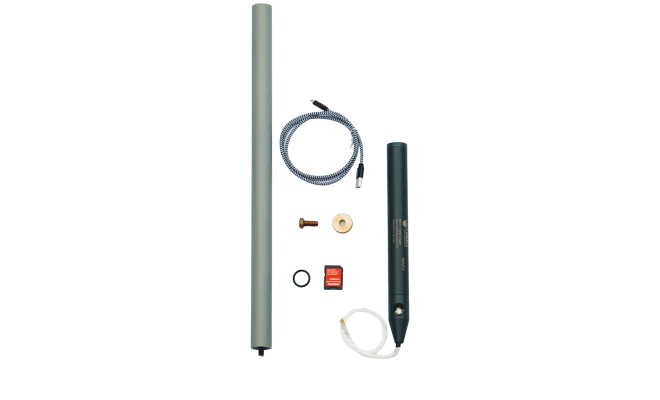
This tilt current meter is field configurable for either low or high current range by simply adding or removing a calibrated ballast weight. The ballast washer is recommended for lower currents consistently under 40 cm/s. Housed rugged PVC, with no external sensors, the TCM-1 is easy to deploy and recover. The built-in data logger includes a USB communication interface, a microSD flash memory card, and a long-life lithium battery.
The TCM-1 Tilt Current Meter measures current using the drag-tilt principle. The data logger is buoyant and anchors to the bottom via a short flexible tether. Moving water tilts the data logger in the direction of flow. Measuring with a 3-axis accelerometer and 3-axis magnetometer for measuring tilt and bearing, the meter's resulting orientation data is converted to current by applying calibration coefficients.
Once the logger is started and running you can run a demo deployment. Disconnect the USB cable, replace the cap on the TCM and deploy it. For a simple demo, simply roll the logger across a flat surface or swing it with your arm.
The meters come with everything you require but if you are planning ahead we suggest a battery replacement tool kit for your specific meter model and additional batteries for the number of meters you are purchasing.
The logger is battery limited not memory limited. It is essentially impossible to collect more than 3GB of data on one battery charge. Unless you charge batteries and don't delete your data, you will never "fill" the card. We are currently shipping meters with 8GB cards (Sandisk Class 4). Our cards arrive pre-formatted FAT32, but if you need to reformat the cards we use the SD association formatter FAT32.
The batteries in our meters are not rechargeable, but they are replaceable. The meters use a custom lithium battery and they are available for purchase. We recommend purchasing the battery replacement tool kit (BRTK2) to make the process easier (the kit includes the first battery) or the individual battery (BAT1) can be purchased separately.
You need a TCM-4 Battery Replacement Tool Kit. The tool kit contains a special tool that allows you to easily open the logger with minimal risk of damaging the electronics. The kit also includes the hex driver and one replacement battery (to get you started). If you need to replace more than one battery, get one tool kit for the first logger and additional replacement batteries for the second, third... loggers. Due to the fact that the circuit board must be removed from the logger, it is recommended that the battery be replaced in the lab/office (not in the field). TCM-4 battery replacement instructions are here. See Accessories for additional information.
The batteries in the MAT-1/TCM-X are lithium thionyl chloride batteries. This chemistry of battery has excellent capacity and a long shelf life, but there is a catch. While in storage, they develop an internal resistance called passivation. In some cases the passivation can be severe enough to brown-out the logger if installed and then immediately deployed. The passivation can be broken down by running the battery. To check, do a test run for a few minutes/hours (depending on the logging settings) and check for errors (red LED and status in Domino software). If there are errors, repeat the test until you are all set.
It can be difficult to determine the amount of capacity remaining in partially used battery. The voltage should be ~3.65-3.75 volts, but that range is valid for the first 85-90% of capacity. (The voltage only declines in the last 10-15% of battery life.) So the voltage is only and indicator to the end of life, similar to the low-fuel indicator in your car. A better indication is how much data has been collected with the meters and for how long. A new battery can collect from 1-2.5GB of data. But an allowance must also be made for time that the battery was installed but not in use. Unless you know the batteries have been replaced and when, it is a good idea to replace them.
To configure the TCM, make sure that both the “Accelerometer” and “Magnetometer” sensors are enabled.
This is a typical setting for Coastal Bay areas.