Image


Everywhere you look in mainstream media, the topic of climate change is inundating headlines. The climate.gov website formed by NOAA (National Oceanic and Atmospheric Administration) is becoming more of a household-recognized name, created to inform and educate the public about the degree and nature of climate change impacts due to global warming—how to prepare, and what can be done locally and globally to mitigate them. In our daily lives, topics related to climate change impacts are likely occurring in conversations on a daily or weekly basis. This recent report showed that 86% of the human population believes climate change is a serious threat.
Unfortunately, when we’re talking about ecosystems, this “matter of degrees” is anything but insignificant. When the whole planet is warmer, as we now are familiar, the consequences are many: extreme heat, storm cycles, increased rainfall, melting sea ice, warming oceans, and so much more. Aquatic ecosystems, like wetlands, rivers, lakes, and coastal estuaries, are experiencing some of the greatest impacts already, with more to come.
With warming trends tied to the melting of sea ice and increasing ocean temperatures, coastal areas are primary climate change impact zones. The rate of sea level rise is accelerating, and U.S. coastlines are projected to rise by 10–12 inches in the next 30 years. This means coastal communities and other aquatic ecosystems face multiple risks and challenges as this wave of warming unfolds. These are just the tip of the melting iceberg.
With higher sea levels and increased precipitation in some areas, tidal estuaries and wetlands that absorb stormwater flows more easily become inundated. This prevents or slows the draining of stormwater systems from infrastructure, which then can lead to excess runoff with potentially harmful pollutants, gray water, and effluents entering local streams, rivers, lakes, and the oceans—which then negatively impact the water quality of aquifers and water resources.
Sea level rise and warmer temperatures in wetlands and watersheds can impact water chemistry and water quality. Water and wetlands also serve as a store for carbon, which prevents greenhouse gasses from entering the atmosphere. If wetland conditions are disrupted, this leads to even MORE carbon being released into the atmosphere vs. beneficial carbon sequestration. Plus, the deterioration of the natural filtration system that wetlands provide compromises water quality, allowing higher levels of salinity to seep further inland and into freshwater resources.
As ocean temperatures are warming, fragile aquatic ecosystems that sustain healthy populations of fish, crustaceans, mollusks, and other invaluable marine life are under immense stress, many species unable to tolerate the sustained higher temperature and levels of salinity. Global attention has been drawn particularly to how severely this has impacted coral reef ecosystems. [Organizations around the world like our partner Coral Reef Alliance (CORAL) are in a race to find solutions to save and restore coral reefs.]
During storms and other weather events, floods become more frequent and sometimes more severe, threatening infrastructure that supports businesses and communities’ economic sustainability and safety. Dams mitigating river flows and controlling reservoirs can overflow, compromising not only human safety downstream, but also critical watershed habitats for fish due to excess sediment, erosion, and streambank/riparian zone deterioration issues.
As temperatures and sea levels rise, lakes found both inland and along coastlines are experiencing impacts that are compromising their aquatic ecosystems. Conditions associated with lake stratification are occurring, the higher sustained air temperatures and sunlight making the surface of the lake hotter, leading to a separation from the cooler water below. Healthy lakes rely on wind or inflows from streams or adjacent wetlands to create “mixing” – the motion that circulates water. Without proper mixing, stratification becomes more stubborn, preventing dissolved oxygen from reaching lower layers and the organisms that rely on it. This effect leads to elevated lake temperatures, increased levels of salinity, and low to no levels of dissolved oxygen that are lasting longer. Stratification due to climate change has also been documented to lead to large algal blooms.
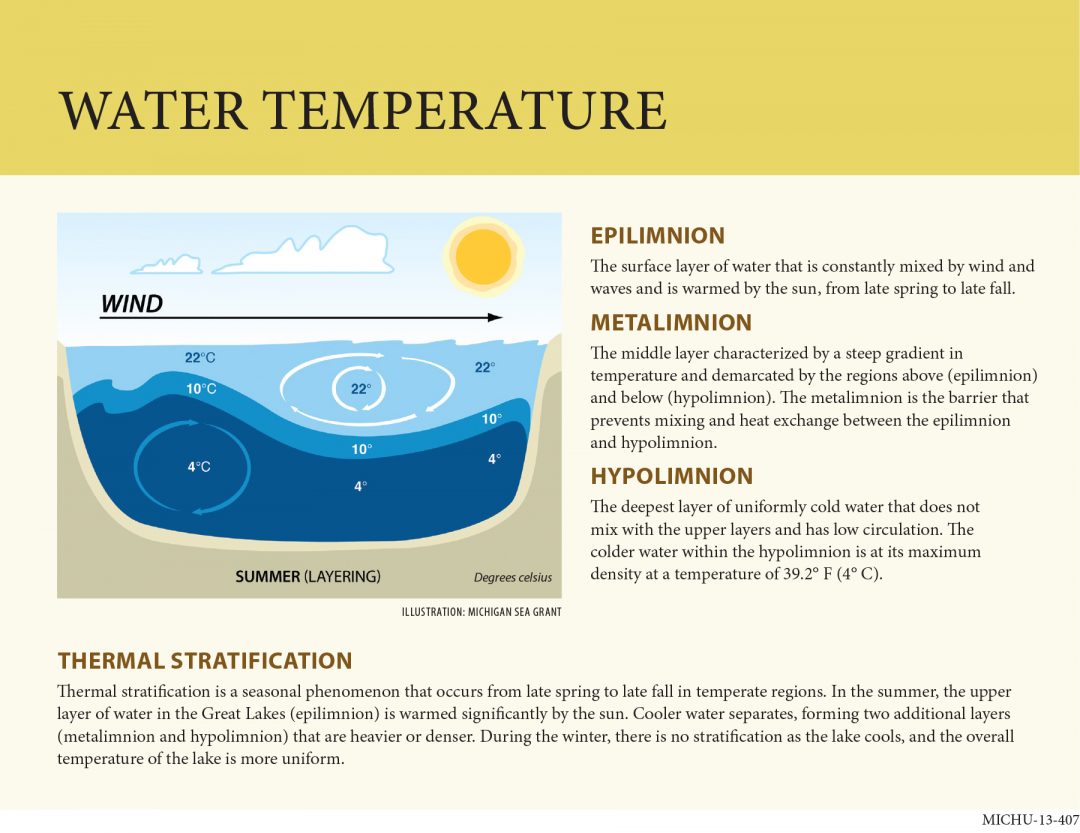
Lake stratification due to climate change has also been tied to large algal blooms that are becoming more common in lakes. Increased nitrates from runoff and sustained, elevated temperatures in lakes create a breeding ground for toxic algae growth that can cut off vital oxygen supplies to fish, destroy healthy plant life and compromise water quality to the point that it’s even unsafe for recreational activities like swimming.
The term “atmospheric river” might ring a bell if you live on the Pacific coast. Periods of intense precipitation due to shifts in global weather patterns can overwhelm ecosystems, stormwater runoff systems, and accelerate soil erosion. The trickle-down effect? Valuable, rich topsoil needed for plant growth is carried away—which is also needed for agricultural operations to stay on target. Sustained, saturated soil moisture levels impact growers’ crop yields and operations by delaying planting and harvesting. Plus, heavy rainfall and wet conditions contribute to plant disease, pests, and damage to trees and riparian habitats.
With higher sea levels, saltwater is intruding into freshwater aquifers. Counterintuitively, coastlines are simultaneously receiving less precipitation, which increases drought conditions. As a result, saline water is making its way further upstream and inland—to estuaries, wetlands, and aquifers, disrupting critical water quality needed to support freshwater species of plants, fish, and dependent consumers.
Given these numerous impacts (and there are many more), the focus on how to make freshwater and coastal aquatic ecosystems and communities more resilient to climate change impacts—has swelled. Governmental agencies, universities, nonprofits, and communities have prioritized funds to support restoration and protection projects in key aquatic zones and habitats that play a critical role in mitigating impacts from climate change and preserving freshwater resources.
Jump to Water Monitoring Solutions
At the heart of all healthy aquatic ecosystems and communities…lies good water quality that comes from healthy water cycles. From wetlands to watersheds, ensuring proper water resource management so that sufficient water reaches key habitats that store carbon instead of produce it, and safeguard good water quality, is critical. Many projects focus on freshwater from a community perspective, looking to improve aquatic habitats that support clean drinking water and healthy water resources.
Did you know coastal mangroves can sequester up to 3-4 times as much Greenhouse Gas (GHG) than terrestrial forests? Clearly, coastlines are a first line of defense against climate impacts beyond buffering the more obvious sea level rise and salinity. So, it makes sense why the National Oceanic and Atmospheric Administration’s (NOAA) recent Bipartisan Infrastructure Law has provided nearly $3 billion in funding over 5 years for estuarine research to support coastal habitat conservation and restoration, resilience and weather forecasting infrastructure. Within the first year, five projects have already protected over 5,246 acres of habitat while reducing “flood risk for nearby communities and providing water quality and recreational benefits.” Funding helps conserve lands that play a critical role in helping coastal communities become more resilient to storms, flooding, inundation, erosion, tsunamis, sea level rise and lake level changes and other natural hazards affecting the U.S. coastlines. Oh, and by the way...they also happen to be one of the biggest Nature-based Solutions for carbon sequestration…Mic drop.
Learn more about NOAA’s National Estuarine Research Reserve System Habitat Protection and Restoration (NERRS) Competition.
As mentioned above, wetlands, coastal mangroves, and peat bogs play a crucial role in storing carbon…when they are functioning well. According to the Stockholm International Water Institute (SIWI), ‘blue carbon’ ecosystems (saltmarshes, seagrass meadows and mangroves) are Nature-based Solutions, or NbS, that have the potential to capture 0.5%-2% of global carbon emissions in the biomass of living organisms, soil, and sediments. These balanced, healthy, wetland ecosystems are natural multi-taskers; also acting as a natural water filter for freshwater, providing critical habitat that supports biodiversity, and serving as a natural storage facility for atmospheric carbon, the biggest culprit tied to global warming. Wetlands for the win!
Speaking of carbon sequestration, HOBO data loggers helped a Korean research team monitor the carbon sequestration capacity of seaweed.
Read Carbon Sequestration Use Case
Somewhat related to wetland restoration to offset climate impacts, projects focused on mitigating flood conditions in other contexts are also on the rise. In addition to wetlands adjacent to coastlines and lake inlets that soak up and slow increased water level flows, watershed riparian restoration, floodplain restoration, and stream restoration projects focus on mitigating the impacts of higher water levels due to flooding. Watershed improvement projects that use hydrological modeling, channel restoration, and streambank mitigation can accommodate and slow increased, faster floodwaters.
Looking for ideas on how to fund a flood mitigation project?
This climate.gov toolkit can give you a great start on how to generate funds or acquire grants to support your flood mitigation initiatives.
Finally, at the heart of healthy water resources is, of course, good water quality. Given the imbalances that can occur in both marine and freshwater environments, often projects begin by gathering data to understand aquatic conditions, like dissolved oxygen percentage, water level fluctuations, water temperature, conductivity, and salinity. Monitoring these parameters is usually the backbone of most aquatic restoration and protection projects to determine the best strategy and its effectiveness.
With the flood of funding and focus on wetland mitigation, aquatic restoration, water quality, and watershed and flood management, teams of researchers and mitigation specialists are pressed to not only gather accurate data, but be able to analyze and apply it for efficient, defensible decisions. Monitoring systems and data loggers that streamline data collection and analysis are invaluable for mitigation and aquatic research teams to save them time and resources. For those on the mitigation front lines, there are water monitoring solutions for climate change related projects that can save time and resources.
Multiparameter Bluetooth Data Loggers
Because multiple parameters are needed to monitor for water quality, multiparameter Bluetooth water quality data loggers like the HOBO MX800 are invaluable, supporting interchangeable sensor configurations for conductivity, temperature and depth (CTD, CT) and Dissolved Oxygen (DO) with a single logger. Plus, their wireless download functionality streamlines data collection, which you can send to the cloud for further analysis via the HOBOconnect app.
Remote Water Level Monitoring Network
For mitigation teams needing to monitor multiple water level sites at once, now it's possible to have multiple water level data loggers send data wirelessly to a cellular gateway station, which sends that water level data in near real-time to the cloud. Now, your team can access and analyze data anytime, from anywhere, saving up to 30% in time and resources it would require to collect data on-site. Watch this webinar with Bob Siegfried of Resource Environmental Solutions to learn more about the benefits of this real-time water level monitoring solution.
For projects involving not only water quality monitoring, but also weather conditions, soil conditions, or other measurements, often you can customize sensors and devices to meet your application's needs. From weather stations to multiple water level sites, you can even add an option to view and analyze all of your data in one place—the cloud—using monitoring software like HOBOlink.
As we navigate this wave of climate change effects and solutions, having the best, timely, and accurate data to make informed decisions is one of the best tools teams can leverage. We're proud to support so many scientists, researchers, and organizations who are using our monitoring products to find sustainable solutions that protect our precious resources, biodiversity, and future!
Learn more about our Water Resource Management and Environmental Research & Protection monitoring solutions.
What is Wetland Restoration and Protection? (EPA website)