Image


The cold hardwood fact? Moisture isn’t friendly for any type of flooring installation.
As a flooring professional, you understand the critical role that temperature and relative humidity play in successful flooring installations. Improper environmental conditions during installations can lead to costly failures, warranty issues, and unhappy clients. Ensuring optimal humidity and temperature conditions during installations is key. To protect your projects, reputation, and most importantly, your bottom line...having real data that documents environmental conditions during and after flooring installation is invaluable.
You know when it comes to hardwood flooring in particular, temperature and humidity directly affect the flooring materials' MC (moisture content); Wood is a hygroscopic material, meaning that it reacts to moisture in the air, so humidity is enemy number one. As relative humidity (RH) increases, wood absorbs moisture and expands. And when it decreases, wood releases moisture and contracts. These dimensional changes can lead to warping, cupping, or unsightly gaps between boards if not properly managed.
And, even though the world of flooring options has expanded far beyond traditional wood materials (like concrete, bamboo, engineered materials, MDF, composite wood), even those alternatives are not immune to the impact of moisture or extreme temperatures, as we’ll explore below.
Poor indoor environmental conditions and high MC during flooring installations can lead to severe consequences for you as a contractor or a homeowner—no one wants to experience the misfortune of replacing an expensive hardwood floor when it could have been saved. Ensuring that the proper temperature and humidity conditions are in place plays a crucial role in the success and longevity of your flooring installation.
You can't talk about humidity or any flooring installation without knowing all you can about the room's MC. MC (and temperature, really) can be influenced by many factors, including the moisture of the subfloor on which you're installing, proximity to plumbing, exposure to exterior walls...So, measuring RH and temp is not a one-size-fits-all measurement. It's important to measure for high humidity and MC in multiple places in the area or room where the flooring will be installed. As a ballpark, you should test different sections that equal a total of 20% of your installation. Ideal MC for flooring installations should fall below 12% MC.
When we're talking about the actual wood's moisture content, there's the added layer of considering how the equilibrium moisture content (EMC) affects the MC of the hardwood or engineered wood to be installed. EMC is the concern for this context, because it's the conditions of the ambient environment of a specific location, its temperature and RH, that influence and determine the optimal MC of the wood. That's a lot of MCs for one event!
Let’s take a look at how flooring issues lay out on the ground due to incorrect moisture, RH and/or temperature:
When humidity levels fluctuate dramatically, wood flooring, and even modern alternatives like laminate and bamboo flooring, can absorb or release moisture, causing it to expand or contract. This can result in unsightly swelling or warping, ultimately compromising both the appearance and structural integrity of the floor. Even worse, swelling floors can separate from the sub-floor, which could lead to the worst-case scenario of having to replace the entire floor if not caught early. Thankfully, though, a fully buckled floor isn’t quite as common, but usually the result of severe, or long-undetected, flooding.
With a moisture imbalance as the main culprit, cupping or crowning of hardwood flooring can occur, but their underlying causes are different.
Cupping in wood flooring usually results from the actual moisture content (MC) of the wood itself, when the moisture content varies within the thickness of the wood, causing it to dry unevenly.
Crowning, when the center of the board rises higher than its edges, happens when humidity in the air is high, or when the floor has been exposed to moisture, like leaks, or when the floorboards become wet too often.
In low humidity environments, hardwood or engineered flooring may shrink, leading to noticeable gaps between planks. These gaps not only detract from the floor's aesthetic appeal but can also trap dirt and debris, making maintenance more challenging. This pattern of shrinking often occurs in the drier months.
Hardwood floors are also susceptible to cracking when temperatures or humidity levels fluctuate. The expansion and shrinking of flooring can cause wood to flex and develop fractures, especially if the air is overly dry. This can happen due to seasonal changes in temperature or humidity, or due to a localized issue—if the flooring is close to a heat source like a fireplace, heating system, or even direct sunlight, for example.
High humidity levels create an ideal breeding ground for mold and mildew. These not-so-fun fungi can not only damage your flooring, but also pose health risks to building occupants, potentially leading to respiratory issues and allergic reactions. This includes engineered flooring, which can break down just like wood.
Temperature and humidity fluctuations can interfere with the curing process of flooring adhesives. This can result in poor bonding, causing tiles or planks to lift or separate from the subfloor over time. Often, that subfloor could be concrete...which comes with its own host of issues when installing it.
Concrete poses possibly the most complex problem when it comes to how moisture and temperature impact its installation. On the one hand, after concrete floors are poured, in order to cure properly, they need to stay MOIST. On the other hand—the sealants that must be applied soon after concrete is poured? Those often require that the surface is DRY. What to do? Throw in the temperature air flow variables, and things get even more complicated. Concrete drying time depends on the rate of evaporation rate. So, it’s going to dry fast in hot, dry temps, and very slowly when the air is cold and damp. Check out this great resource on concrete countertops that really dives into the concrete details, like dew point.
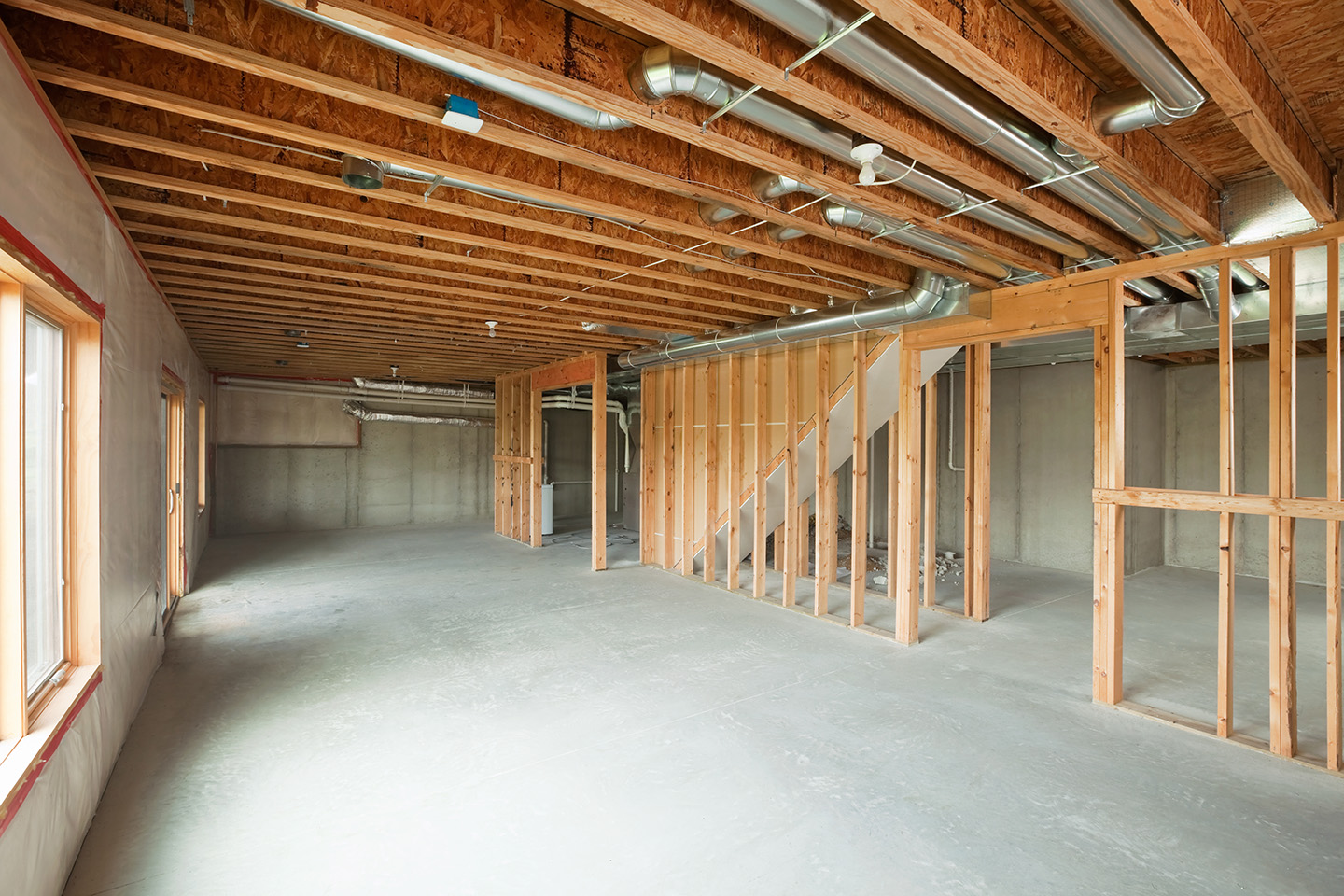
So now that we're aware of the pitfalls, we can focus on how to keep your flooring of choice in an optimal humidity and temperature range to ensure your installation goes as smoothly as possible and protects your flooring investment in the future.
Coveted for their quality and aesthetic, hardwood floors require careful environmental control to maintain their beauty and integrity. The ideal temperature range for installing and maintaining hardwood flooring is between 60°F and 80°F (15.5°C to 26.7°C). RH should be kept between 35% and 55%. Gauging the actual MC of the wood itself is the other important factor; make sure you take into consideration the thickness of the wood, which could impact the moisture level within the planks themselves if some areas are drier than others before installation.
Fluctuations outside these temp and RH ranges can cause wood to expand, contract, or warp, potentially leading to gaps, cupping, or other damage. It's also important to consider other variables that could be contributing to higher humidity before proceeding with installation.
Engineered wood and laminate flooring are more stable than solid hardwood, but still benefit from consistent conditions. Aim for temperatures between 65°F and 85°F (18.3°C to 29.4°C) and RH levels of 30% to 50%. These materials are slightly more forgiving, but extreme variations can still cause issues like delamination or buckling.
Vinyl and other resilient flooring types are highly adaptable but perform best in moderate conditions. Keep temperatures between 65°F and 85°F (18.3°C to 29.4°C) and RH between 35% and 65%. While these floors are less susceptible to moisture-related problems, maintaining consistent levels helps prevent adhesive breakdown and ensures longevity.
A critical part of concrete curing is keeping the concrete moist during the curing process, which increases its strength and integrity. To keep the air moist enough for concrete to optimally cure, generally the internal relative humidity needs to be above 80% to 85% relative humidity for hydration of the curing concrete to take place. It’s common practice to wet the surface of the concrete to create a barrier to prevent the moisture within the poured concrete from evaporating too quickly. Ensure that you are keeping the temperature at levels that don't slow or speed up that drying process.
The good news is, yes! Thankfully, simple, affordable solutions exist to help you monitor and maintain ideal conditions to protect your flooring installation…for years to come.
See how an award-winning flooring installer relies on HOBO data loggers to protect his installations
When it comes to maintaining the proper conditions for flooring installations, continuous monitoring of temperature and relative humidity (RH) is crucial. Not only does it ensure long-lasting, high-quality results—it also serves as your business insurance policy. Proof of proper installation and monitoring indoor conditions after installation are gold when customers come calling back asking questions!
Because fluctuations in these environmental factors can significantly impact the performance and lifespan of your flooring materials, having data on-hand to reference can protect your investment, your reputation, and help you avoid costly repairs or replacements down the line.
Enter, IoT monitoring solutions for flooring installations! Continuous monitoring of humidity and temperature using data loggers along with real-time cloud-based software and mobile monitoring apps is the wave of the flooring future, giving you invaluable insights into environmental conditions. These devices offer a reliable, convenient, and cost-effective way to track and record temperature and RH fluctuations over time, ensuring that your flooring project stays within recommended parameters throughout the installation process and beyond.
Let’s look at some great options that can keep you on top of your flooring conditions. Whether you’re installing a multi-million dollar gymnasium floor or making sure your latest living room look lasts—a little bit of data goes a long way.
With its wide temperature range (-20°C to 70°C) and exceptional accuracy, the HOBO MX1101 equips you with a high precision tool to protect your work (and hardwood floors!) by monitoring both temperature and humidity. It can help you:
Check out the MX1101 Temp and RH Data Logger
For more extreme application environments, a weatherproof MX2301A gives you a broader temperature range from -40°C to 70°C (-40° to 158°F), while, like the MX1101, delivering Bluetooth wireless data download capabilities and alarm settings to keep you informed when conditions fall outside your desired range.
The beauty of both Bluetooth data loggers is that you can easily deploy them in discreet locations to prevent tampering, access real-time data without disturbing the installation area, and download it to your mobile device or laptop computer using our free HOBOconnect app. This opens up even more time and resource-saving opportunities:
Flooring contractors who need to track multiple loggers or projects at once can boost their monitoring with these data loggers even further by adding an MX Gateway station, a small device that automatically transmits data from MX Series data loggers right to the cloud, where users can store their flooring data and even generate visuals to detect trends and more using the robust tools of our HOBOlink software platform.
The answer seems clear! It's in your best interest to protect your work and investment with simple monitoring solutions that ensure your flooring is installed in optimal conditions and protected in the long run. And having real data that proves your due diligence to customers is invaluable.
Wishing you and your floors a long, happy, and humidity-healthy future!
See our range of temperature and humidity monitoring solutions